In the heart of the Causse de Villeneuve , this circuit is ideal for families , well marked (large blue arrows) and accessible to all! Follow the paths between oaks and junipers to discover the dolmens of Foissac , large monolithic stones built one on top of the other and take the opportunity to listen to nature.
- Duration : 1h30 – 5.5km
- Interior Exterior : outside
- Budget : Free
- Features: loop hike
- Markup: big blue arrows
- Best season : From spring to autumn
- Useful Information : sneakers type shoes, hat/cap and bottle of water
Let's go for a walk in the woods!
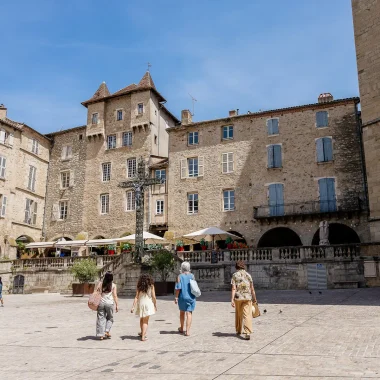
We arrive in the village of Foissac , we park in the small village square, opposite the café… I think we'll be happy to have a drink when we get back! Off we go for a 5,5 km family walk on the paths and through the fields of the Causse.
Wearing sneakers, we walked along the road for 1km, then turned onto a path bordered by low stone walls. A few meters to our left, we discovered our first caselle ( a traditional stone hut ) in the middle of a field. It was an impressive example of dry-stone construction! The farmers of yesteryear possessed true skill and patience to find the right flat stones to build these huts!


We have fun weaving between the trees of the limestone plateau : the oaks are slender and tall, it looks as if they are trying to touch the sky!
Next, we arrive at the first dolmen of this "Jonade 1" walk, near a sinkhole, a large stone lying in the heart of the woods…

We continue on our way, towards "Jonade 2", autumn leaves cover the ground, the chirping birds fall silent as we pass, Nathan finds 1000 treasures : acorns, leaves, pebbles and branches!
We take a breath of fresh air, what a joy to share this moment together!
In the heart of the causse, we take our time!

After traveling 400 meters along the road, we plunged onto a new path, not a single house in sight , just nature and us … in the juniper field, the few tall grasses that manage to grow on this dry land tickle our legs!
And then, around a small bend, here is a new dolmen, "the cloup of Rhines," almost complete!
And off we go for exploration, we turn around, we analyze the position of the stones, they are leaning and form like a tent… how about we take a look below to see what is going on?
Then, we continue thanks to the indications of Nathan, proud to show us the way: “it's on the right! ! Ok, we follow the arrows !!!
The discovery of a dolmen in perfect condition
After passing between the trees and following the path through the woods, we arrived near another dolmen, "Les Places 3." The large stone was broken, but the pebbles were enormous, and a few meters further on, there it was! The most remarkable dolmen of this hike, "Les Places 2," stood proudly before us! It was time for a snack break, to enjoy the surrounding nature, where wild animals such as deer, birds, and wild boar are common. We lingered for a while beside this immense, ancient structure, wondering how prehistoric humans managed to build such monuments. We answered Nathan's questions about these megaliths: Who built them? Why? How long have they been there? And you, do you have the answers?


We continue ?
Following the path, we made more wonderful discoveries: on the dry meadows, orchids and wildflowers swayed in the wind, and we observed caselles (3 in total, 2 of which were in perfect condition)! There were even cairns (or rock balancing), pyramids of stones … were they to show us the way, to invoke certain spirits, or had previous hikers wanted to "add their stones to the structure"?
It's time for us to return to our car at a leisurely pace, our lungs full of fresh air, our eyes filled with wonder at these vestiges of the past, and our bag filled with the "treasures" that Nathan found along the way... After drinking a fruit juice at the Café Charlet, we head towards the Foissac Caves , where Sébastien awaits us for a most surprising visit!
Next time, we'll try the Dolmens of Martiel trail , and why don't you put on your shoes to discover these Aveyron megaliths?
To see beautiful wild orchids, take the route in the spring... be careful to take care of these flowers: do not crush them, do not pick them. Remember to respect nature, keep your papers in the bag, and follow the marked path carefully! Good walk !
Themes